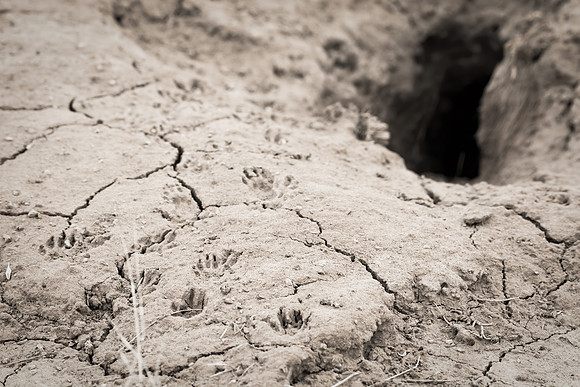
Prairie Dog Tracks
Prairie dog tracks near a den entrance, in the Bighorn Basin, Wyoming. Prairie dogs are rodents, in the same family as squirrels, marmots, and chipmunks. Communities (of these black-tailed prairie dogs) live in towns. They can have dozens of individuals, or up to hundreds of millions in ideal circumstances. These underground towns are very intelligently designed with designated sleeping areas, nurseries, and toilets. Individuals take turns keeping watch for predators, and as soon as a warning call is emitted, it echoes through the town and all the prairie dogs disappear underground. Their burrows provide homes for dozens of animals including black-footed ferrets, burrowing owls, and snakes. Due to their destructive landscaping they tend to be regarded as pests and sometimes, even when the towns are out in the middle of nowhere, they're shot just for fun (a clear sign of a mentally well-adjusted person). They're also tied to a myth that horses break their legs in prairie dog towns, but surveys of ranchers have struggled to find any evidence. Not only do they provide homes for dozens of animals that rely on them, but they are also an important food source for many more, including golden eagles, owls, hawks, black-footed ferrets, foxes, and badgers. They're so ecologically important that they are considered a keystone species.